ServicesRoof inspection
Casa Grande Roof Inspections
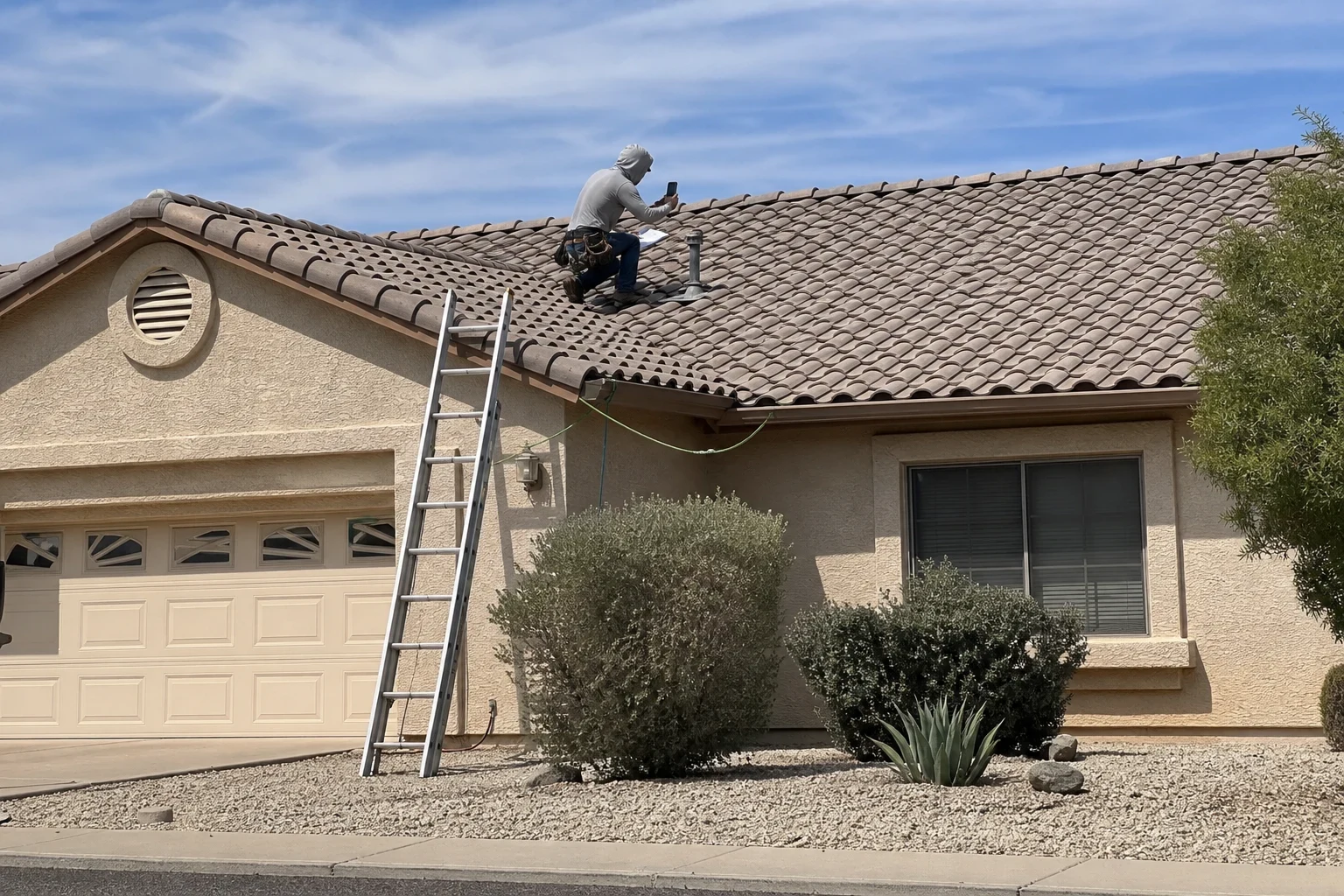
We go over your roof, look in the attic when possible and take pictures of everything we find. Booking gets you a two-hour arrival window, you get a text if plans change, and afterward a written summary sorts what needs work now from what can wait.
What a roof inspection is for
A roof inspection tells you the condition of your roof before something forces the question. Desert roofs wear in ways you can't see from the yard. Sun bakes sealant until it cracks. Tile looks fine while the underlayment beneath it dries out and splits. Flat roofs hold water in low spots after a monsoon storm.
It's the right call when you're buying or selling a home, when your roof is past 15 years old, after a hard storm, or when you just want to know where you stand before you budget. If we find a problem, we tell you whether it's roof repair, roof replacement or nothing yet.
We book inspections like any appointment you'd plan your day around. You get a set window, a heads-up text when we're on the way, and a call if weather or a job running long changes the plan.
What we check on every visit
- Roof surface
- Cracked, slipped or broken tile, worn or lifted shingles, and blistered or bare spots on foam and coated flat roofs. We note how much of the surface is affected, not just that damage exists.
- Flashing and penetrations
- Pipe boots, vents, skylights, chimneys and wall flashing. These are where most leaks start, and rubber pipe boots often crack in the Arizona sun well before the roof does.
- Valleys, drains and scuppers
- Dust and debris pile up in valleys and roof drains after wind. We look for blockage and standing-water marks, and check that scuppers on flat sections empty the way they should.
- Attic and decking
- If the attic is reachable, we look for water stains, daylight, damp insulation and soft decking. It's often the only way to see what the underlayment is doing under tile.
- Photos and a written summary
- You get photos of what we found and a short summary in plain words. Items are sorted into fix now, watch, and fine for now.
Signs it's time to have your roof looked at
Stains on the ceiling
A brown ring or bubbled paint means water got through somewhere. The spot on the ceiling is rarely right under the leak.
Tiles out of place
Slipped or broken tile from the ground is a sign of wind, foot traffic or aging fasteners. One gap is enough to let monsoon rain reach the underlayment.
After a monsoon or dust storm
Strong gusts lift shingles and shift tile. Heavy short rain finds weak spots fast. A look afterward catches damage before the next storm does.
Roof age of 15 years or more
Many homes around Casa Grande were built in the early 2000s. That puts a lot of original underlayment and flat roof coatings at the point where they start to fail.
Buying or selling
A roof report gives both sides the same facts. It helps avoid surprises late in a sale.
Granules in the gutters
On shingle roofs, piles of grit in gutters or at downspouts mean the shingles are losing their protective layer.
What the inspection price depends on
You'll know the visit price when you book, so nothing changes at the door. Any work we find gets its own written quote, and whether and when to do it is up to you.
How big and tall the roof is
A one-story ranch goes faster than a steep two-story house. Height also decides which ladders and safety gear we bring.
What it's made of
Walking concrete tile safely takes longer than shingle. A roof mixing tile with a flat section needs both kinds of check.
Getting into the attic
A clear hallway hatch is easy. A cramped attic or one blocked by storage takes more time.
How detailed the report is
A basic summary comes standard. A longer report for a sale or an insurance file takes more time to prepare.
How the inspection day goes
- 1
Booking and your window
When you call, we set a day and a two-hour arrival window. We ask about roof type, any leaks and attic access so we bring the right ladder and gear.
- 2
On-the-way text
You get a text when we leave the job before yours. If we're running late or weather moves in, we call and give you a new time instead of leaving you guessing.
- 3
On the roof and in the attic
Most homes take about an hour, sometimes more for large tile or multi-level roofs. We walk tile carefully to avoid cracking it. You don't need to be on the roof with us, but we're glad to show you photos on the spot.
- 4
Walk-through and summary
Before we leave, we go over what we saw. The written summary with photos follows, and we tell you when to expect it.
Questions about inspections
How quickly can you get here?
That changes with the season. After a monsoon storm the calendar fills, while cooler months tend to move faster. When you call, the date we give is one we can keep.
Does someone have to be there?
Not for the roof. For an attic check or an end-of-visit walk-through, yes. If no one's home, we send the photos and call to talk them through.
Could you crack my tile walking on it?
Concrete tile can break under a bad step. We put our weight on the supported lower edge and stay off areas we don't need to cross. If one does crack, we let you know and replace it.
Is this a pitch for a new roof?
No. Most visits end with a few small fixes or none. When replacement really is the answer, we show you why in photos and you decide on your own time.
After a storm, should I have you inspect before I call my insurer?
It can help. Photos and notes on what changed give you solid ground with your insurer. We aren't your adjuster, but our storm damage repair page covers how we help there.
Will you come out beyond Casa Grande?
Yes, to Maricopa, Coolidge, Eloy, Florence, Queen Creek, Gilbert and Chandler. Longer drives can mean a different day, and we'll say so when you book.
Know what your roof needs before the next storm
Tell us a day that works and we'll give you an arrival window and keep you posted. You'll leave the visit with photos and a straight list of what matters.