ServicesRoof replacement
New Roofs for Casa Grande Homes
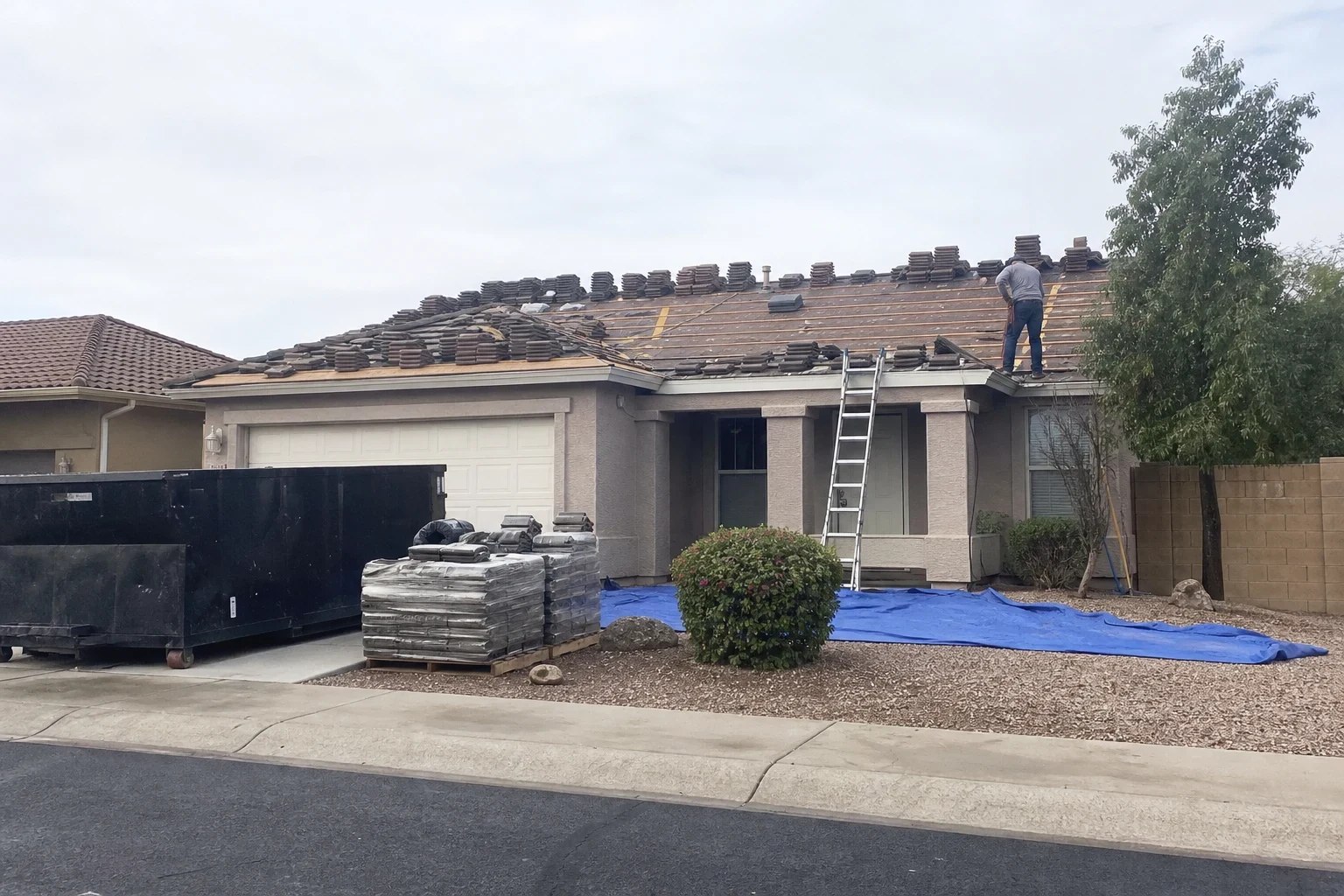
Once patching no longer makes sense, we rebuild the roof starting at the deck. You'll have a written estimate, a start date we can keep and a crew that arrives inside the window we set. When weather or a delivery shifts things, we're the ones who call you about it.
When it makes sense to replace the roof
Roofs in Casa Grande rarely fail from a single storm. They wear down over years as UV and summer heat bake the underlayment and monsoon gusts tug at anything already loose. Concrete tile is common here, and it usually outlives the felt beneath it. When that felt dries out and cracks, summer rain makes its way to the deck.
Replacement is our suggestion only once repairs stop paying off. A handful of slipped tiles or a single failed flashing calls for roof repair, which costs less, and we'll tell you that. Unsure about your roof's condition? Start with a roof inspection.
Reroofing takes over your house for several days, so we plan the schedule as carefully as the roof. Before work begins, you'll know the start date, our working hours and the number of days it should take.
What's part of every replacement
- Stripping to bare wood
- Old roofing and underlayment come off so the decking is visible. With tile, we can often set aside good tiles and put them back on, which saves money.
- Checking and fixing the deck
- Any sheathing that's soft, stained or coming apart is swapped out before new layers go down. You see photos and the added cost before we remove it.
- Heat-rated underlayment
- Roofs and attics here get much hotter than in mild climates. On a tile roof this layer keeps most of the water out, so we pick one built to handle that heat.
- New flashing, boots and drip edge
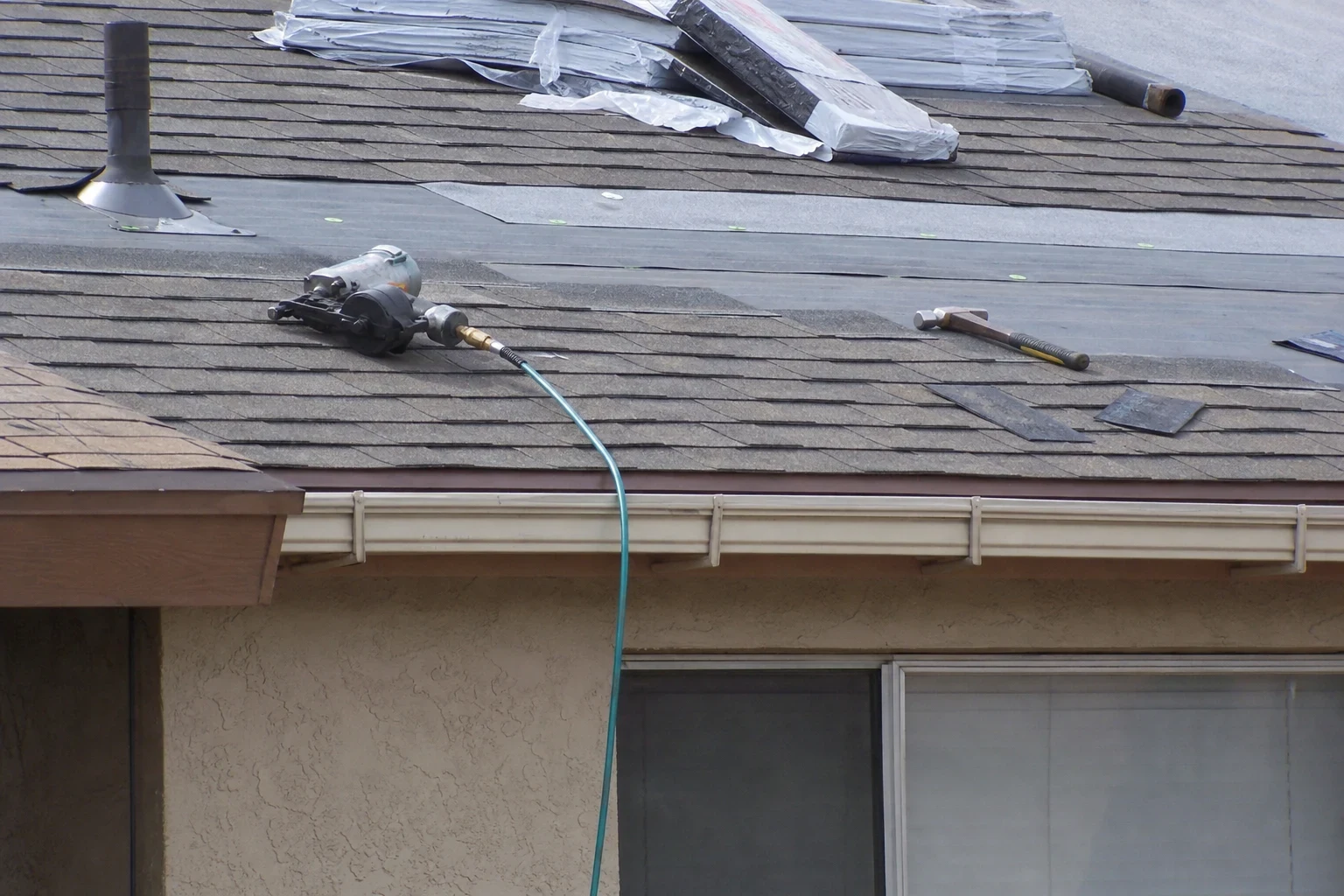
- Walls, chimneys and valleys get fresh flashing, and pipe boots and drip edge are replaced too. Worn flashing causes many leaks, so none of it goes back on.
- Flat and low-slope areas
- Patio covers and flat spots behind parapets get material made for low pitch instead of shingles pushed beyond what they can handle.
- Cleanup each day
- Old material goes straight into the dumpster, and before leaving we sweep the driveway and yard with a nail magnet.
How to tell a roof is due for replacement
Exposed felt
When broken or shifted tiles reveal black or gray felt, that layer is sitting in the sun. If it falls apart at a touch, the rest of the roof is probably just as old.
A new leak every monsoon
A single leak is usually repairable. Fresh leaks showing up summer after summer tend to mean the underlayment has given out all over.
Shingles curling or losing grit
Sun dries shingles out. Edges that curl and bald areas where granules have worn off say they're close to done.
Worn or bubbled flat roof
Blisters, cracks or exposed foam let water pool and seep in. Beyond a certain point, a new coat won't fix it.
Dips or spongy areas
A sagging roofline or a soft feel when walked on suggests the deck is wet. Have it checked soon.
What changes the cost
We price each roof from its own measurements and condition, never from a satellite image. These items shift the total most, and each gets its own line on your written estimate.
Roof area and steepness
A bigger roof takes more material and hours. Steep pitches go slower and need added safety gear.
Which material
Concrete tile, shingle and low-slope roofing each carry a different price. Putting good tile back on can bring the cost down.
Hidden deck damage
Bad decking only shows once the old roof is off. We set a per-sheet price ahead of time so you aren't caught off guard.
Old layers and getting in
Stripping two old layers takes more time. Narrow lots, pools and patio covers can slow loading and cleanup.
Permits and extras
Permit fees, plus chimneys, skylights and solar panels that have to come off and go back, add time and money.
The steps of a replacement
- 1
Looking at the roof
We go over the roof, look in the attic when it's reachable and take pictures. Then we sit with you and review what turned up.
- 2
Estimate and start date in writing
You receive an itemized estimate and a start date we plan to hold. Where the city or county requires a permit, we get it, and materials are ordered to land before the crew.
- 3
One day ahead
We confirm when we'll arrive and where the dumpster and materials will sit. Please clear cars from the driveway and take breakables off shelves on shared walls.
- 4
Removal and new roof
Summer days start early to avoid peak heat. Anything we strip gets underlayment over it before we leave that day. If a monsoon cell is coming, we let you know if we're stopping and when we'll return.
- 5
Final inspection and walk
Once any required inspection passes, we tour the roof and yard with you and give you the job photos.
Common reroof questions
How many days will a new roof take?
A shingle roof on a typical single-family home usually runs one to three days. Tile takes more time because of tile handling and underlayment. Your estimate lists the day count, and we'll tell you if something changes it.
Will you work in summer?
Yes, on adjusted hours. We start at first light and finish before the afternoon gets hottest. On larger roofs that may add a day, and it's in the schedule from day one.
What if a monsoon rolls in partway through?
During the season we check the forecast each morning and only open what we can dry in by day's end. If we have to stop, the roof gets secured and we tell you when we're coming back.
Does someone need to be home?
Only at the start and the final walk-through, ideally. Expect noise, and keep kids and pets away from the work zone and dumpster.
Could I keep my tile and only redo the underlayment?
In many cases. When the tile is sound, we lift it, lay new underlayment and flashing, then put it back with new pieces where any are broken. After the estimate visit we'll tell you if your tile is worth saving.
Do you reroof beyond Casa Grande?
Yes, in Maricopa, Coolidge, Eloy and Florence and out toward Queen Creek, Gilbert and Chandler. Drive time can affect the schedule, so it's built into the start date we give you.
Ready to put a new roof on the calendar?
Tell us a little about your house and we'll set up a time to look at the roof. You'll leave with a written estimate and a start date you can count on.